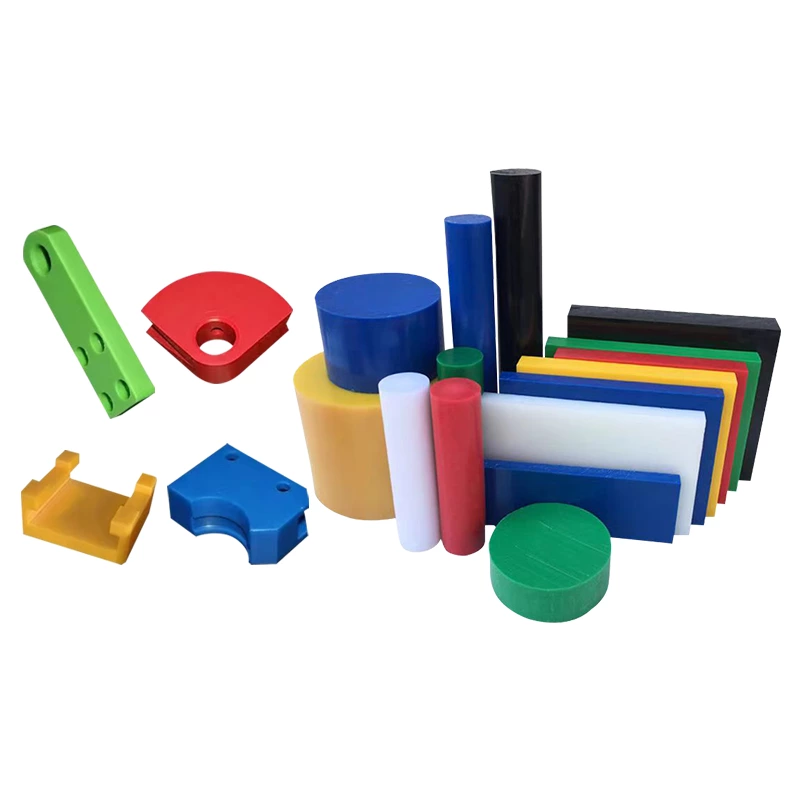
Engineering Plastics Performance Comparison: How To Choose The Right Material
Engineering Plastics Performance Comparison: How to Choose the Right Material
Engineering plastics are widely used in modern industries due to their excellent mechanical strength, wear resistance, and chemical stability. Common materials such as UHMWPE sheet, HDPE sheet, Nylon rod, POM sheet (Acetal), PET sheet, PTFE sheet, PEEK, PVC, Polypropylene (PP), and Polycarbonate (PC) each have unique advantages.
Choosing the correct material can significantly improve product performance, reduce maintenance costs, and extend service life.
This article compares the key performance characteristics of these popular engineering plastics.
Operating Temperature Range of Engineering Plastics
Operating temperature is one of the most important factors when selecting plastic materials for industrial applications.
High-performance plastics such as PEEK and PTFE offer outstanding heat resistance and can operate at temperatures exceeding 250°C in short-term conditions.
Medium temperature materials include:
-
Nylon (PA6 / PA66)
-
POM (Acetal)
-
PET (Polyester)
These materials typically perform well between 100°C and 160°C, making them suitable for mechanical components and industrial equipment.
Lower temperature materials such as HDPE, PP, and PVC are commonly used for general industrial applications and chemical containers.
Mechanical Strength: Tensile and Compressive Performance
For load-bearing components, mechanical strength is critical.
Materials with high tensile strength include:
-
Nylon rod / Nylon sheet
-
PET engineering plastic
-
PEEK high-performance polymer
These materials are widely used for:
-
mechanical gears
-
structural components
-
industrial machinery parts
In terms of compressive strength, POM (Acetal) and Nylon perform particularly well and are commonly used in precision mechanical applications.
Low Friction Materials for Sliding Applications
When components require smooth movement and low friction, materials like PTFE sheet and UHMWPE sheet are ideal.
Key advantages include:
-
extremely low friction coefficient
-
excellent self-lubricating properties
-
outstanding wear resistance
These materials are commonly used in:
-
conveyor guide rails
-
wear strips
-
sliding blocks
-
industrial liners
Impact Resistance of Engineering Plastics
Impact strength determines how well a material can withstand sudden force.
UHMWPE and Polycarbonate (PC) demonstrate exceptional impact resistance, making them suitable for heavy-duty applications such as:
-
protective components
-
machine guards
-
high-impact industrial parts
Moisture Absorption Characteristics
Moisture absorption can influence dimensional stability.
Among engineering plastics:
-
Nylon materials absorb more moisture
-
POM, PET, PE, and PTFE have very low moisture absorption
For precision mechanical parts or humid environments, low moisture absorption materials are generally preferred.
Wear Resistance and Abrasion Performance
For applications involving friction and abrasion, UHMWPE sheet offers outstanding wear resistance. Cast Nylon and PET also provide excellent durability in high-wear environments.
Typical applications include:
-
mining equipment liners
-
bulk material handling systems
-
conveyor system components
-
food processing machinery
Cost Comparison of Engineering Plastics
Cost is another important factor when selecting materials.
Lower cost engineering plastics include:
-
Polypropylene (PP)
-
PVC
-
HDPE
Mid-range materials offering a balance between price and performance include:
-
Nylon
-
POM
High-performance polymers such as PEEK and PTFE are more expensive but provide exceptional thermal, mechanical, and chemical resistance.
Conclusion
Each engineering plastic has its own strengths depending on the application requirements.
For example:
-
UHMWPE sheet – excellent wear resistance and impact strength
-
Nylon rod – high mechanical strength
-
POM sheet – precision mechanical components
-
PTFE sheet – ultra-low friction applications
-
PEEK – high-temperature industrial environments
Understanding these differences helps engineers and buyers choose the most suitable material for their specific applications.